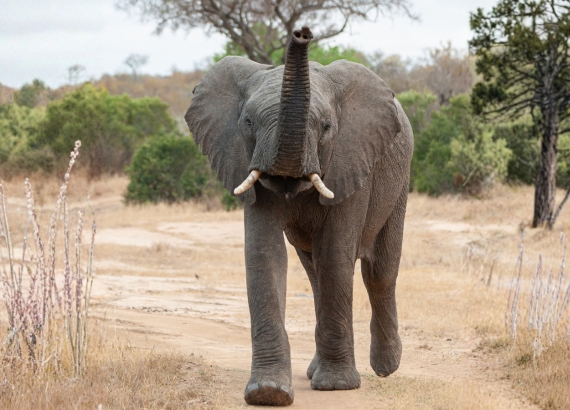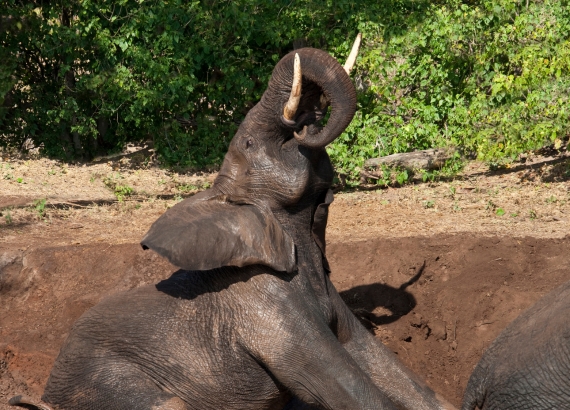
Few sights on game drives bring as much pure joy as watching a herd of elephants discover a fresh mud hole. There’s splashing, trumpeting, and absolute chaos as multi-ton giants roll around like playful puppies in the sludge. But while it looks like pure entertainment, there is some serious survival science behind every single splash.
In the latest episode of The Ranger Diaries, Ranger Biggie gives us the inside scoop on elephant mud wallowing – proving that out here in the Waterberg, a messy mud bath is the ultimate wilderness spa day!
1. ☀️ All-Natural Sunscreen
Despite their thick, tough appearance, an elephant’s hide is surprisingly sensitive to sunburn, especially across the tender skin of their back, ears, and trunk. Because they spend their days roaming under the open African sky, they need a reliable defense against UV rays. A thorough coating of wet mud acts as a thick, mineral-rich barrier that shields their skin from the intense heat of the sun.
2. 🦟 The Ultimate Bug Repellent
Once the mud dries into a crusty layer, it serves an important secondary purpose: defense against pests. The dry mud forms an impenetrable shield that keeps biting flies, ticks, and mosquitoes from reaching their skin. When the mud eventually flakes off, it acts as an exfoliating scrub, taking pesky parasites and dead skin right along with it!
3. 🌡️ Built-In Air Conditioning
Unlike humans, elephants don’t have sweat glands spread across their bodies to help them cool down on scorching savanna afternoons. While flapping their large, vein-rich ears helps dissipate heat, a cool mud bath provides instant thermal relief. As the moisture slowly evaporates from the mud caked on their skin, it draws heat away from their core, keeping their body temperature regulated during hot weather.
The Magic of the Waterberg Waterholes
Ranger Biggie’s breakdown highlights how every instinctual behavior in the wild serves a vital purpose. Watching these gentle giants coating themselves in red bushveld earth at one of Mabalingwe’s waterholes is a powerful reminder of how seamlessly African wildlife adapts to its environment.
Next time you join us on a safari drive across our 8,500 hectares, keep your eyes peeled near the dams and muddy banks – you might just catch a front-row seat to the bushveld’s most famous skincare routine!
Have you ever witnessed an elephant herd enjoying a mud wallow during your time at Mabalingwe?